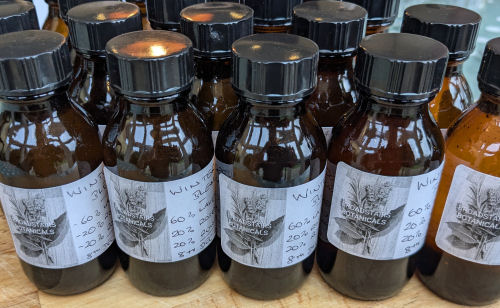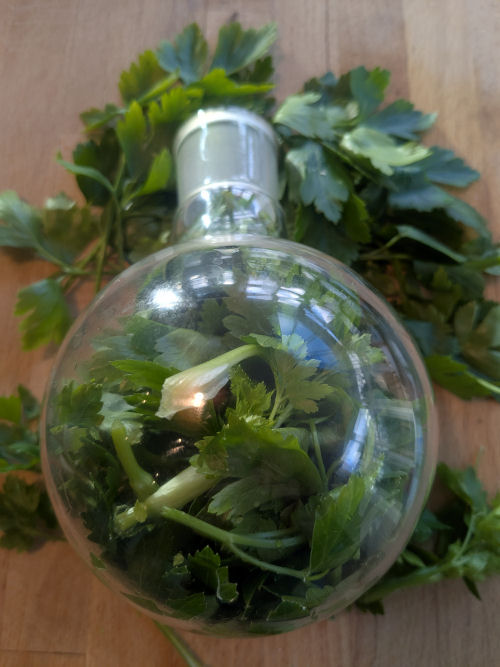
The distillation process is something that apothecaries and alchemists have been using for millennia. In industry it has progressed to some incredibly efficient processes, but for Broadstairs Botanicals, we are just using the three basic processes:
- Hydro-distillation — this is where the plant material is placed into water and it is then boiled. This works very well for robust materials.
- Steam distillation — this is where steam is passed through the plant materials, this works well for the more delicate materials.
- Combination — this is often if you have more plant material than the water you put in with hydro-distillation, so the material boils and the steam that now has some of the aromas is passed through more material to pick up more on the way.
The benefit that these processes have is you only have two raw materials, the botanical and water.
The process is trying to get the botanical to give up its oil or water soluble aromas and flavours. To simplify it, we can think of them as secretory sacs (little molecular bags that hold and secrete something we want).
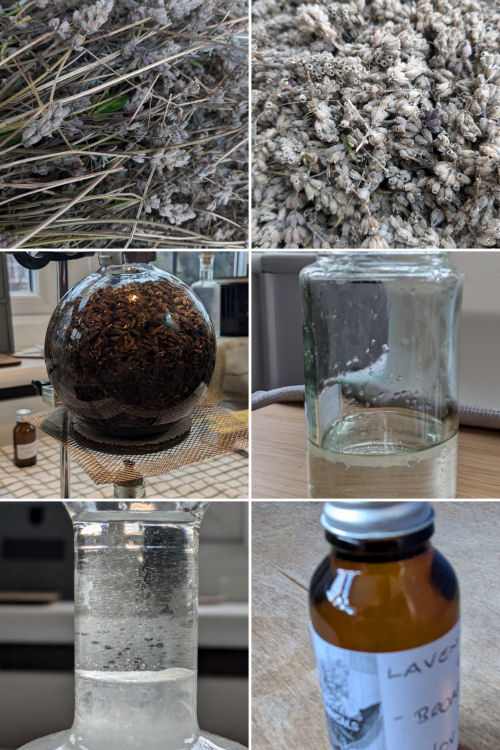
What happens is very simple:
- The plant material is placed in the vessel, depending on the process.
- The water is added either with the material or below it (for the steam process).
- This then boils, which heats up the plant material, when then breaks open the sacs.
- As the steam is still rising up, it takes some of the good stuff with it, sometime dissolved into the steam and sometimes with the oils mixed in with the steam.
- You then pass this through a cool condenser, which persuades the gaseous steam to turn back into a liquid. As the oil condenses out at different temperatures it comes away from the watery mixture.
- This then produces a good volume of water with dissolved botanical elements (called a hydrosol) and a tiny amount of essential oil. The oil can often be as little as 1% of the liquid produced.
- As oils and waters do not mix, the oil generally sits on top of the liquid, allowing you to separate the essential oil from the hydrosol (botanical water).
Essential oils are well known and have had a resurgence over the last few decades, but hydrosols are less well known, but are gaining importance again, our grandparents would have known them as "flower waters". Hydrosols are being viewed positively for skincare, hair care and household aromatherapy.
People like the fact that it is plant based, very simple and very pure. All things that are important to the beauty and wellness community. They have similar properties to the essential oil, but because they are much less concentrated it makes them suitable for direct usage. Also for Broadstairs Botanicals the hydrosols of plants like lavender, rosemary, bay and rowan are produced in larger volumes so many more people can get the benefit from them.
One thing to note is that a hydrosol is not a water that has had some essential oil added. The true hydrosol has different molecules from the plant which have dissolved into the water.